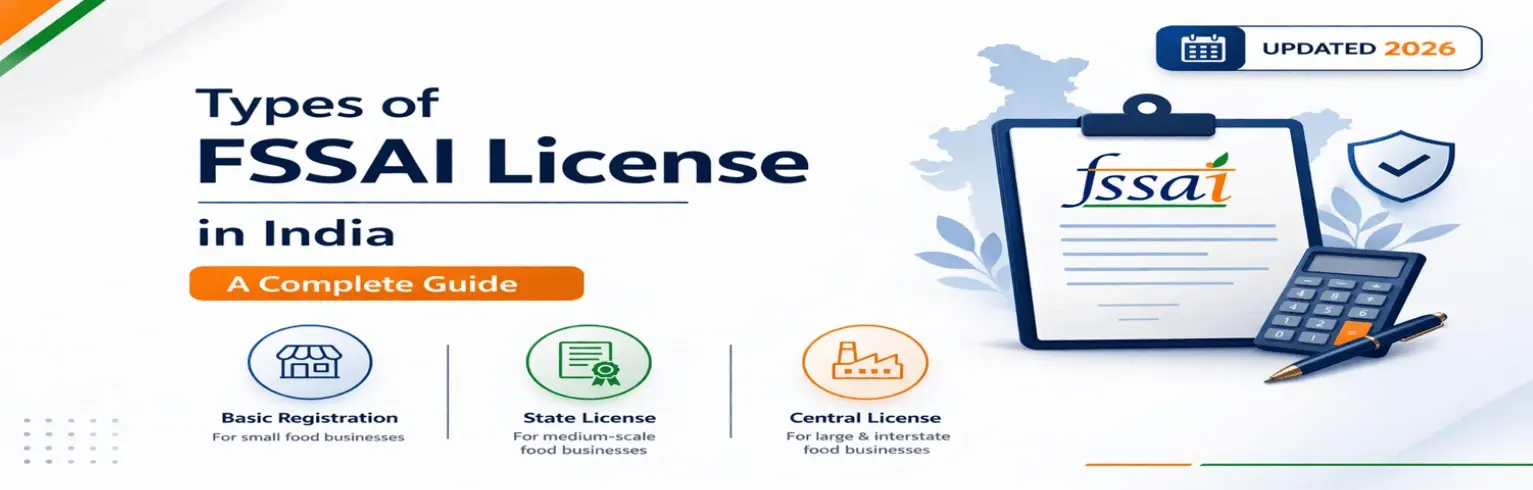
Types of FSSAI License in India A Complete Guide 2026
The establishment of any food-based business in India is an absolute need for compliance with all relevant food safety laws. Obtaining the appropriate FSSAI License is the key legal requirement for starting a food-related business in India. If you happen to manage a food business that operates from home, restaurants, a cloud kitchen, or even a food manufacturing unit, it is crucial to know all the types of FSSAI licenses.
Here is a guide for you that talks about all types of FSSAI licenses.
What is an FSSAI License?
FSSAI stands for Food Safety and Standards Authority of India, which is the regulatory and supervisory agency that governs food safety regulations in India. All Food Business Operators (FBOs) must register for FSSAI according to their operational status and annual turnover.
The FSSAI license comes with a 14-digit unique number, which must be displayed on food packaging, invoices, and business premises.
Why is FSSAI License Important in India?
Getting an FSSAI license is not just about compliance—it directly impacts your business credibility and growth.
Key Benefits:
- Ensures food quality and hygiene standards
- Builds consumer trust and brand value
- Mandatory for listing on platforms like Zomato & Swiggy
- Helps in business expansion and partnerships
- Protects you from legal penalties
Types of FSSAI License in India
FSSAI licenses are categorized into three types based on business size, turnover, and operational scale:
- Basic FSSAI Registration
- FSSAI State License
- FSSAI Central License
Let's understand each in detail.
1. Basic FSSAI Registration
Overview
Basic FSSAI Registration is designed for small-scale food businesses and startups that are just starting out.
Eligibility Criteria:
- Annual turnover up to ₹12 Lakhs
Suitable For:
- Street food vendors
- Home-based food businesses
- Small shops and retailers
- Temporary stalls or petty food businesses
Features:
- Simple and quick registration process
- Minimal documentation required
- Ideal for individuals and beginners
👉 If you're starting a small food venture, this is the first step toward legal compliance.
Also Read: Basic FSSAI Registration: Complete Guide for Small Food Businesses in India (2026)
Basic FSSAI Registration is a mandatory food safety registration for small food business operators (FBOs) in India with an annual turnover of up to ₹12 lakh.
Read Full Article →2. FSSAI State License
Overview
The State License is meant for medium-sized food businesses operating within a single state.
Eligibility Criteria:
- Annual turnover between ₹12 Lakhs to ₹20 Crores
Suitable For:
- Restaurants and cafes
- Cloud kitchens
- Medium-scale manufacturers
- Food distributors and transporters
- Storage units
Features:
- Issued by the State Government
- Moderate compliance requirements
- Suitable for expanding businesses
👉 If your business is growing and crossing ₹12 lakhs turnover, you must upgrade to this license.
Also Read: FSSAI State License: Complete Guide for Food Businesses in India (2026)
FSSAI State License is a compulsory food license required for medium-sized food businesses in India with an annual turnover limit between ₹12 lakh and ₹20 crore.
Read Full Article →3. FSSAI Central License
Overview
The Central License is required for large-scale businesses and those operating across multiple states or internationally.
Eligibility Criteria:
- Annual turnover above ₹20 Crores
Suitable For:
- Large manufacturers
- Importers and exporters
- E-commerce food sellers
- Food chains operating in multiple states
Features:
- Issued by Central Government (FSSAI authority)
- High-level compliance and inspections
- Mandatory for international trade
👉 If your business operates nationwide or deals in exports, this license is compulsory.
Also Read: FSSAI Central License: Complete Guide for Large Food Businesses in India (2026)
FSSAI Central License is a necessary food license required for wide-ranging food businesses in India with an annual turnover above ₹20 crore or those operating across multiple states.
Read Full Article →Major Differences Between FSSAI Licenses
| Criteria | Basic Registration | State License | Central License |
|---|---|---|---|
| Turnover Limit | Up to ₹12 Lakhs | ₹12L – ₹20 Cr | Above ₹20 Cr |
| Business Size | Small | Medium | Large |
| Authority | Local | State Govt | Central Govt |
| Compliance Level | Low | Medium | High |
How to Choose the Right FSSAI License?
Choosing the correct license depends on multiple factors:
- 1. Business Turnover
- Your annual revenue determines which license you need.
- 2. Scale of Operations
- Small, medium, or large business size matters.
- 3. Location
- Operating in one state or multiple states changes your license type.
- 4. Nature of Business
- Manufacturing, selling, transporting, or exporting food products.
👉 Pro Tip: Always choose the correct license category to avoid penalties and unnecessary delays.
Documents Required for FSSAI License
To apply for any FSSAI license, you typically need:
- PAN Card of business owner
- Aadhaar Card
- Business registration proof
- Address proof of premises
- Food safety management plan
- List of food products
- Passport-size photograph
- Additional documents may be required depending on your license type
FSSAI License Fees
- Basic Registration: ₹100 per year
- State License: ₹2,000 – ₹5,000 per year
- Central License: ₹7,500 per year
Fees may vary depending on business category and duration.
Validity of FSSAI License
FSSAI licenses are valid for 1 to 5 years, depending on your selection during application. You must renew the license before expiry to avoid penalties.
Penalty for Not Having FSSAI License
Operating a food business without an FSSAI license can result in:
- Penalty up to ₹5 Lakhs
- Business closure
- Legal action
👉 Compliance is not optional—it is mandatory for all food businesses.
Step-by-Step Process to Apply for FSSAI License
- Visit the official FSSAI website
- Select your business category
- Fill Form A (Basic) or Form B (State/Central)
- Upload required documents
- Pay application fees
- Submit application
- Wait for verification and approval
Once approved, you will receive your FSSAI license number.
Common Mistakes to Avoid
- Choosing the wrong license type
- Submitting incomplete documents
- Ignoring renewal deadlines
- Not upgrading license after business growth
- Providing incorrect business details
Avoiding these mistakes ensures a smooth approval process.
FAQs on Types of FSSAI License
1. Can I upgrade my FSSAI license later?
Yes, you can upgrade your license as your business grows.
2. Is FSSAI required for home-based food business?
Yes, at least Basic Registration is mandatory.
3. Is FSSAI required for cloud kitchens?
Yes, based on turnover and operations.
4. Can one business have multiple licenses?
Yes, if operating in multiple states or units.
Conclusion
Knowing about different FSSAI licenses is very important for setting up a successful food business in India. Whether you are a vendor or an exporter, you need to get the right license depending upon your turnover and activities.
- Basic Registration is perfect for small enterprises
- State License is suitable for growing organisations
- A Central License is compulsory for big organisations
Selecting the right license will not only ensure compliance but also add value to your organisation.