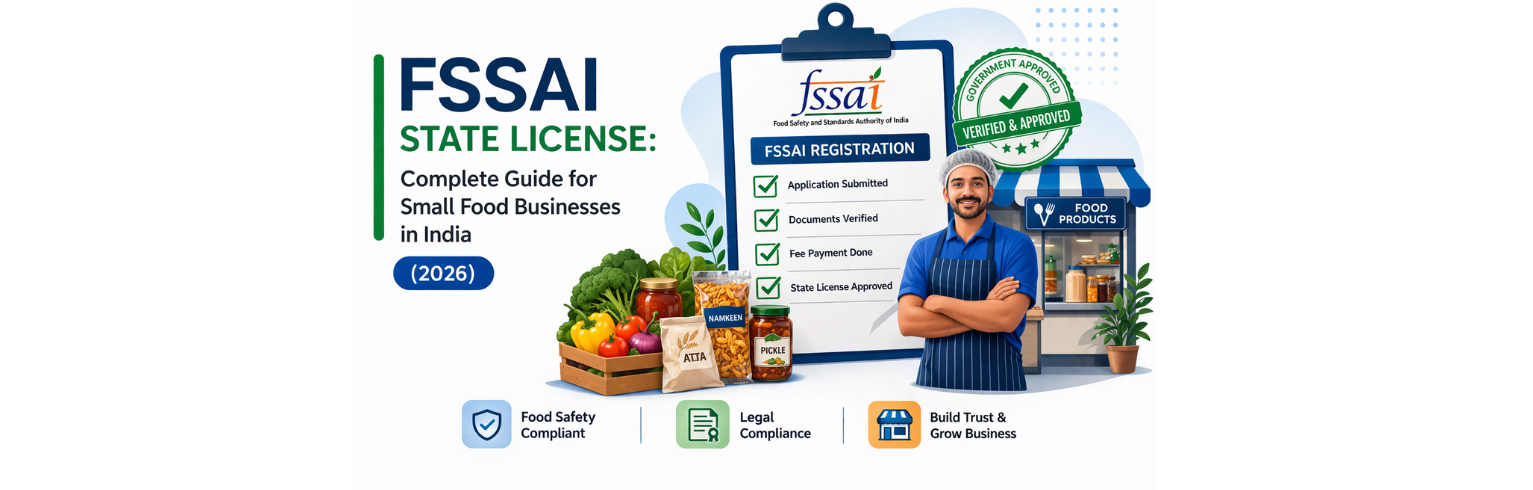
FSSAI State License: Complete Guide for Food Businesses in India (2026)
Quick Overview
FSSAI State License is a compulsory food license required for medium-sized food businesses in India with an annual turnover limit between ₹12 lakh and ₹20 crore. It is provided by the State of Government under the Food Safety and Standards Authority of India (FSSAI) to make sure food safety and hygiene compliance.
What is FSSAI State License?
The FSSAI State License is a middle-of-the-road food license designed for businesses that operate at a larger scale than small vendors but do not qualify for a central license.
It ensures that all food businesses and owners follow proper hygiene standards, maintain food quality, and comply with the FSSAI Act, .
Every license holder receives a 14-digit FSSAI license number, which must be displayed on packaging, invoices, and premises.
Who Needs an FSSAI State License?
If your food business falls under the medium-scale category, you must apply for an FSSAI State License.
Eligible Businesses:
- Medium-sized food manufacturers
- Storage units and warehouses
- Transporters of food products
- Restaurants and cafes
- Cloud kitchens
- Food processors and packers
- Wholesalers and distributors
👉 If your turnover exceeds ₹20 crore, you must apply for a Central FSSAI License.
Why is FSSAI State License Important?
1. Legal Compliance
Running a food business without an FSSAI State License is illegal and punishable under Indian law.
2. Ensures Food Safety
It guarantees that your food products meet government safety standards.
3. Business Expansion
You can expand operations across the state and collaborate with bigger vendors and platforms.
4. Builds Brand Trust
Customers trust licensed businesses that comply with food safety norms.
Documents Required for FSSAI State License
To apply for FSSAI State License, you need:
- Passport-size photograph of applicant
- Identity proof (Aadhaar/PAN)
- Business address proof
- Layout plan of food premises
- List of food products
- Equipment and machinery details
- NOC from local authorities (if required)
- Water test report (for food manufacturing units)
- Proof of business constitution (LLP, Company, etc.)
Step-by-Step Process to Apply for FSSAI State License
Step 1: Visit FoSCoS Portal
Go to the official FSSAI online portal.
Step 2: Fill Form B
Select "State License" and fill in detailed business information.
Step 3: Upload Documents
Submit all required documents online.
Step 4: Inspection by Authorities
Food safety officers may inspect your premises.
Step 5: Approval & License Issuance
Once approved, you will receive your FSSAI State License certificate.
FSSAI State License Fees
The fees of FSSAI State License depends on the type of business:
₹2,000 to ₹5,000 per year (approx.)
The exact fee varies based on business category and production capacity.
Validity and Renewal
- Valid for 1 to 5 years
- Renewal required before expiry
- Late renewal may attract penalties
Difference Between Basic, State & Central License
| License Type | Turnover | Applicability |
|---|---|---|
| Basic Registration | Up to ₹12 lakh | Small businesses |
| State License | ₹12 lakh – ₹20 crore | Medium businesses |
| Central License | Above ₹20 crore | Large businesses |
Penalties for Non-Compliance
Operating without an FSSAI State License can result in:
- Fine up to ₹5 lakh
- Business closure
- Legal action
Common Mistakes to Avoid
- Selecting wrong license category
- Submitting incomplete documents
- Incorrect business details
- Ignoring hygiene standards
- Delayed renewal
Avoiding these errors ensures faster approval.
FSSAI State License in Delhi & India
If you are looking for an FSSAI State License in Delhi, the application process is online, but local compliance and inspections are handled by state authorities.
Location-Based Keywords:
- FSSAI State License in Delhi
- Food license in Delhi NCR
- FSSAI consultant near me
- Apply for an FSSAI license in India
👉 Businesses in Delhi NCR can benefit from expert assistance for faster approvals and documentation accuracy.
Frequently Asked Questions
What is the turnover limit for the FSSAI State License?
The turnover limit for the FSSAI State License is ₹12 lakh to ₹20 crore annually.
How long does it take to get an FSSAI State License?
FSSAI License Takes Usually 15–30 working days.
Is inspection mandatory for a State License?
Yes, in most cases, inspection is conducted before approval.
Can I apply online?
Yes, you can apply for the FSSAI state license for the FoSCoS portal.
What is the validity of the FSSAI State License?
The validity for the FSSAI State License is between 1 and 5 years
Expert Tips to Get FSSAI State License Faster
- Choose correct license category
- Prepare complete documentation
- Maintain hygiene standards
- Use professional consultants
- Ensure accurate business details
Why Choose Professional Help?
Applying for an FSSAI State License involves documentation, compliance, and inspections. Professional services help you:
- Avoid rejection
- Speed up approval
- Ensure compliance
- Handle inspections smoothly
Future of Food Business Compliance in India (2026)
With increasing digitalisation and stricter food safety laws, obtaining an FSSAI State License is becoming more critical than ever. Businesses that comply early gain a competitive advantage in online platforms and marketplaces.
Conclusion
The FSSAI State License is essential for medium-sized food businesses aiming to operate legally and grow in India. It ensures food safety, builds customer trust, and enables business expansion.
Whether you run a restaurant, cloud kitchen, or food processing unit, getting your FSSAI State License is a crucial step toward long-term success
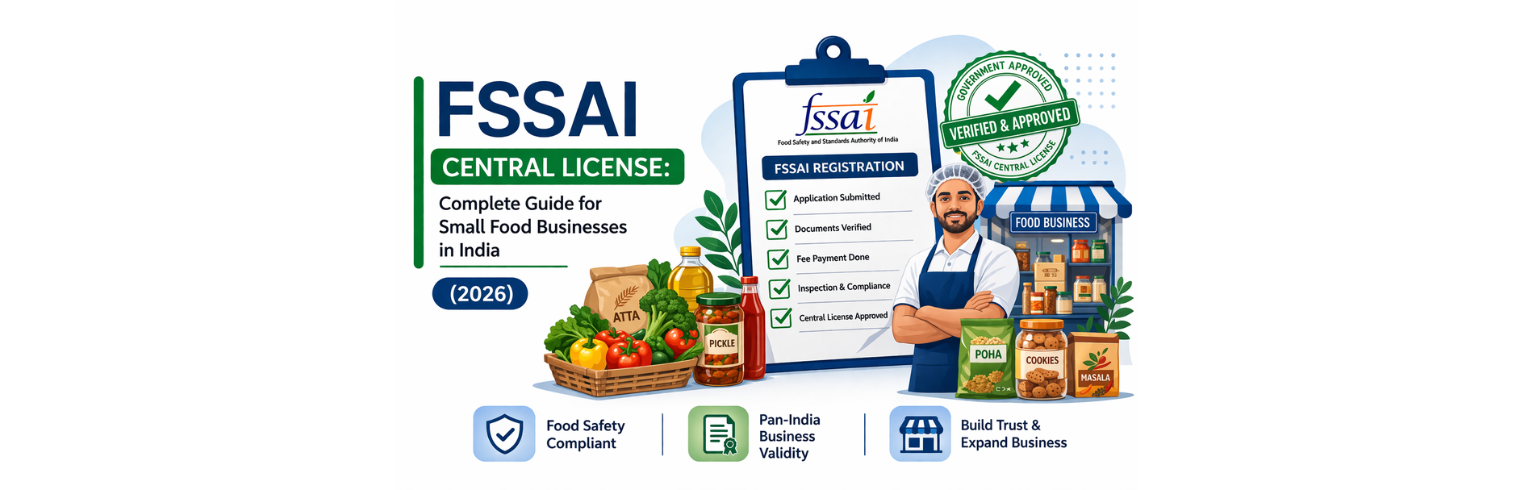
Also Read: FSSAI Central License: Complete Guide for Large Food Businesses in India (2026)
FSSAI Central License is a necessary food license required for wide-ranging food businesses in India with an annual turnover above ₹20 crore or those operating across multiple states.
Read Full Article →