FSSAI Registration for Milk and Milk Products in India
A complete guide for dairy producers, suppliers, and distributors in India — understand why FSSAI registration matters, how to apply, and what documents you need to stay compliant.
Understanding the Role of FSSAI in Dairy Safety
Milk and its products play a vital role in India's food culture and economy. From small farmers to large dairy factories, the dairy sector supports millions and fuels exports. Because of its scale and importance, food safety becomes a top priority — that's where the Food Safety and Standards Authority of India (FSSAI) steps in.
FSSAI monitors the production, storage, distribution, and sale of food to ensure everything we consume is safe. For dairy businesses, it sets hygiene standards, labeling rules, and product quality norms from raw milk to cheese, butter, and ice cream.
Important: If you are in the milk or dairy business in India, you must have an FSSAI registration or license — operating without one is against the law.

Why FSSAI Registration Matters for Your Dairy Business
Having an FSSAI registration isn't just a legal requirement — it's a mark of trust, safety, and credibility for your brand.
Safety First
Your dairy products comply with national safety standards, protecting consumers from unsafe products.
Customer Trust
Displaying an FSSAI number builds confidence — customers know your products are tested and certified safe.
Business Growth
FSSAI registration helps you sell in major stores, expand distribution, and even export your dairy products internationally.
Legal Compliance
Avoid fines or shutdowns by following FSSAI regulations — it keeps your business legally protected.
Better Reputation
FSSAI compliance boosts your brand image, showing that you value safety, quality, and consumer health.
Who Needs to Register?
Pretty much everyone in the dairy business needs to register with FSSAI. This includes:
- Dairy farmers
- Milk collectors
- Storage places
- Processing plants
- Wholesalers and distributors
- Retailers and online sellers
- Exporters and importers
- Small local producers (like cheese or ghee makers)
Different Kinds of FSSAI Licenses
FSSAI offers three types of licenses depending on your business size and annual turnover.
| Type of License | Eligibility (Annual Turnover) | Applicable To | Issued By |
|---|---|---|---|
| Basic FSSAI Registration | Up to ₹12 lakh | Small dairy farms, petty milk vendors, small-scale milk product makers | State Government |
| State FSSAI License | ₹12 lakh to ₹20 crore | Medium-sized dairy units, milk chilling centers, processing plants | State Authority |
| Central FSSAI License | Above ₹20 crore or involved in export/import | Large dairy companies, exporters, importers, multi-state operators | Central FSSAI Office |
Step-by-Step Process for FSSAI Registration for Milk and Milk Products
Here's how to get an FSSAI registration or license for your dairy business:
-
Determine the Type of License
Evaluate your business size, yearly revenue, and operational type to determine whether you need a Basic, State, or Central FSSAI license.
-
Prepare Required Documents
Keep all essential documents ready before applying. (See the next section for details.)
-
Apply Online via FoSCoS Portal
Visit FSSAI Registration Portal (FoSCoS), create an account, and complete the online application.
-
Fee Payment
Pay the applicable license fee based on the type of FSSAI license you're applying for.
-
Inspection (If Required)
The authority may inspect your dairy facility, storage unit, or processing plant before final approval.
-
Issuance of FSSAI License
Once verified, your FSSAI License Number is issued. Display it on product packaging and your business premises.
Documents Required for FSSAI Registration for Milk and Dairy Products
Keep these documents ready to ensure smooth registration:
- ID and address proof of the applicant
- Passport-size photographs
- Business registration certificate
- Proof of business premises address
- List of milk or dairy products manufactured
- Food safety management plan
- Equipment and machinery details
- Water testing report
- Milk sourcing and supply plan
- Layout plan of your dairy or storage unit
- ID proofs of directors or partners
- For large units – lab test reports and additional certifications
FSSAI Rules for Milk and Milk Products
FSSAI sets clear rules to ensure quality and purity in all milk and dairy products sold in India.
- Classification based on milk type (cow, buffalo, etc.)
- Minimum fat and solids-not-fat (SNF) content standards
- Rules for pasteurized, toned, or flavored milk
- Standards for ghee, butter, cheese, curd, and other milk derivatives
- Limits for preservatives, contaminants, and heavy metals
- Proper labeling and packaging requirements
FSSAI Labeling and Packaging Guidelines for Dairy Products
For any milk product sold in India, the packaging and labeling must adhere to FSSAI standards, including:
- FSSAI License Number: Must appear on every packaging.
- Product Name and Type: Clearly mention whether it's cow milk, buffalo milk, skimmed milk, etc.
- Date of Manufacture and Expiry: Clearly legible and prominently printed.
- Nutritional Information: Include energy, fat, protein, and carbohydrate content.
- Storage Instructions: For example, "Keep refrigerated below 4°C."
- Batch/Code Number: For traceability in case of recalls.
- Allergen Declaration: Mention if milk is used as an ingredient.
Proper labeling not only ensures compliance but also builds consumer confidence.
Renewal and Validity of FSSAI License
An FSSAI license is valid for one to five years, based on what you pick during application. Make sure to renew it at least a month before it expires, or you may face penalties. Operating with an expired license may lead to suspension or legal action.
What Happens If You Break the Rules?
FSSAI takes food safety very seriously:
- If you don't have a license, you can be fined or shut down.
- If you sell unsafe milk, you may face heavy fines or imprisonment.
- If you mislabel products, you can be fined.
- If you add unsafe ingredients, penalties or jail terms may apply.
Benefits of FSSAI Registration for Dairy Stakeholders
- Market Recognition: Builds trust among consumers and retailers.
- Business Growth: Enables entry into retail chains, tenders, and exports.
- Enhanced Product Quality: Promotes hygiene and consistent standards.
- Legal Protection: Guards against fines and legal disputes.
- Support for Exports: Many countries require FSSAI compliance for imports.
Conclusion
The dairy sector plays a vital role in India, making it essential to uphold high safety and quality standards. Whether you're a small farmer or a large enterprise, obtaining and maintaining FSSAI registration is crucial.
It ensures legal compliance, builds customer trust, and drives sustainable business growth. If you're launching or expanding your dairy business, securing an FSSAI license is a smart and essential step toward a reputable, trustworthy operation in India.
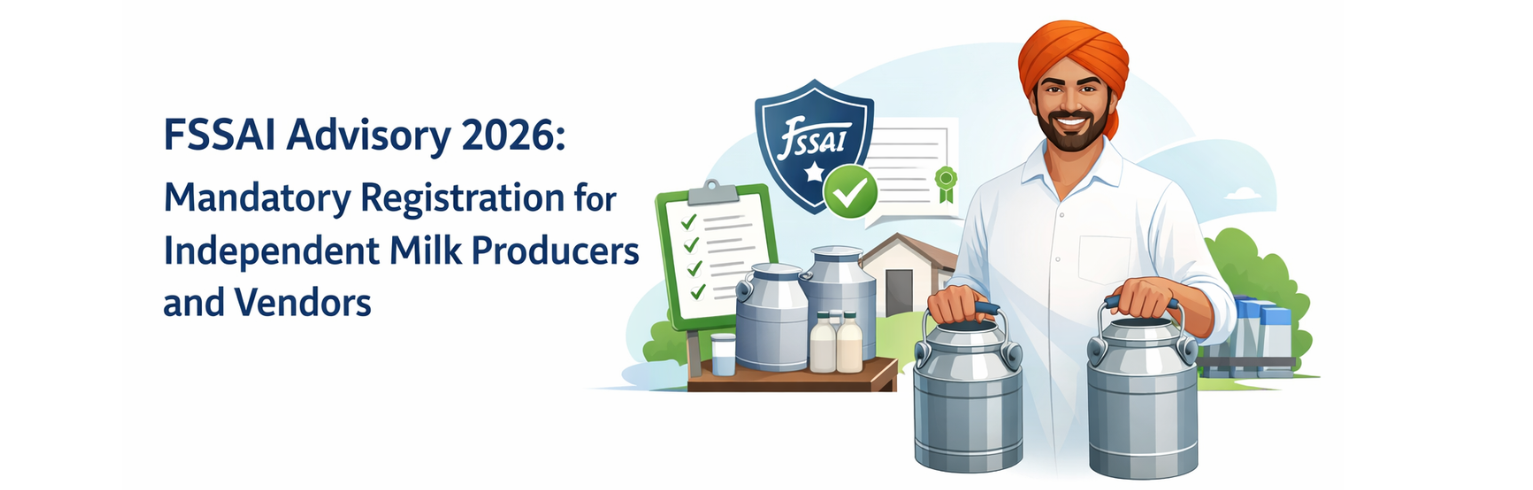
Also Read: FSSAI Advisory 2026: Milk Producer Registration
FSSAI Advisory 2026 makes registration mandatory for all milk producers and vendors in India. Know the rules, costs & process. Get expert help from legalxcode!
Read Full Article →